Name generator
Korean Name Generator
Explore 236 distinct Korean names from this guide. Compare names by style and origin, with spelling and meaning context in the guide. Choose a category or letter to narrow your results, then copy or save your favorites.
Showing 15 of 236 matching Korean names.
Results use different initials when available. Counts reflect the names in this guide; some letters and categories naturally have fewer matches. Letters without matches are hidden.
- Han-gyeolGuide: rareHangul / Hanja: 한결
Native word: consistent
- Jae-yulGuide: rareHangul / Hanja: 재율
Check character choices
- A-solGuide: rareHangul / Hanja: 아솔
Confirm cultural use
- Yun-seulGuide: rareHangul / Hanja: 윤슬
Sunlight or moonlight sparkling on water
- Do-yeonGuide: rareHangul / Hanja: 도연
Literary, soft
- Ra-onGuide: rareHangul / Hanja: 라온
Joyful association
- Si-onGuide: rareHangul / Hanja: 시온
Also biblical place name in Korean usage
- Chae-rinGuide: rareHangul / Hanja: 채린
Character-dependent meaning
- Ga-ramGuide: rareHangul / Hanja: 가람
River (literary Korean)
- NuriGuide: rareHangul / Hanja: 누리
World
- Eun-gyeolGuide: rareHangul / Hanja: 은결
Check cultural fit
- Byeol-haGuide: rareHangul / Hanja: 별하
Star-based poetic suggestion
- Hae-inGuide: rareHangul / Hanja: 해인
Character-dependent meaning
- A-raGuide: rareHangul / Hanja: 아라
Often associated with sea; check usage
- Da-somGuide: rareHangul / Hanja: 다솜
Love (older Korean form)
Meanings depend on the exact spelling, language and context. Read the guide for pronunciation, writing and naming traditions. View your shortlist
Korean names combine memorable sounds, cultural history and personal meaning. Whether you want a baby name, a believable fictional character, a pen name or ideas inspired by Korean language and culture, this guide helps you choose something that feels natural rather than randomly assembled. Browse girl, boy, gender-neutral, traditional, modern and nature-inspired Korean names, with Hangul spellings and useful context.
Unlike a typical list that assigns one English translation to every name, this guide separates native Korean vocabulary names from names whose meanings depend on Hanja (Chinese characters used in Korean names). That distinction matters: two children called Ji-woo could have different official name meanings even when their Hangul spelling is identical. Names marked “style” describe an impression, not a guaranteed translation.
Quick Guide to Korean Names
| Feature | What readers should know |
|---|---|
| Name order | Family name first, then the given name: Kim Seo-yun (김서윤). |
| Typical form | A one-syllable surname plus a two-syllable given name is common, not universal. |
| Writing system | Hangul gives pronunciation; specific Hanja may provide an additional meaning. |
| Name meanings | The same Hangul name can be written with different Hanja and have different meanings. |
| Names without Hanja | Native Korean words such as 하늘 (sky) and 사랑 (love) can be names. |
| Romanization | Seo-yun, Seoyun and Seo Yun may represent the same Korean given name. |
For a fast shortlist, try Seo-yun, Ha-rin and Ji-an for girls; Do-yun, Ha-jun and Seo-jun for boys; and Ji-woo, Ha-neul or Ga-on for a flexible or nature-inspired choice. The perfect fit depends on pronunciation, the exact written form, family preferences and whether it is intended for a real person or a fictional character.
Most Popular Korean Baby Names in 2025
The following top-ten lists are specifically reported for births registered in 2025, as summarized by The Korea Times in January 2026 from Namechart data linked to South Korea’s family registration system. They are historical 2025 rankings, not an invented live 2026 chart. English spellings vary; the Hangul shown here identifies the intended syllables.
Top 10 Korean Boy Names (2025)
| Rank | Name | Hangul |
|---|---|---|
| 1 | Do-yun | 도윤 |
| 2 | I-jun / Yi-jun | 이준 |
| 3 | Si-u / Si-woo | 시우 |
| 4 | Ha-jun | 하준 |
| 5 | Tae-o | 태오 |
| 6 | Do-hyeon | 도현 |
| 7 | I-an / Yi-an | 이안 |
| 8 | I-hyeon / Yi-hyeon | 이현 |
| 9 | Seo-jun | 서준 |
| 10 | Eun-u / Eun-woo | 은우 |
Top 10 Korean Girl Names (2025)
| Rank | Name | Hangul |
|---|---|---|
| 1 | Seo-yun / Seo-yoon | 서윤 |
| 2 | Seo-a | 서아 |
| 3 | A-rin | 아린 |
| 4 | I-seo / Yi-seo | 이서 |
| 5 | Ji-an | 지안 |
| 6 | Ha-yun | 하윤 |
| 7 | Ha-rin | 하린 |
| 8 | A-yun | 아윤 |
| 9 | Ji-yu / Ji-yoo | 지유 |
| 10 | Si-a | 시아 |
These rankings are reported in The Korea Times (2025 birth-name data): https://www.koreatimes.co.kr/lifestyle/trends/20260113/koreas-favorite-baby-names-of-2025
What stands out is the number of concise two-syllable combinations using Seo, Ha, Ji, Yun and Rin. These familiar sounds work in many combinations, but a trend ranking by itself cannot tell you what Hanja a particular family selected. Treat the lists as an overview of contemporary naming taste.
Korean Girl Names: Pretty, Classic and Modern Ideas
Popular Korean girl names can feel airy, graceful, bright or sophisticated. Below, the rightmost column describes a naming style or possible character-based association, not a single universally fixed definition. When a name has a pure-Korean vocabulary meaning, that is shown explicitly in a later section.
| Name | Hangul | Style / note |
|---|---|---|
| Seo-yun | 서윤 | Modern, soft-sounding |
| Seo-a | 서아 | Short and contemporary |
| A-rin | 아린 | Delicate, trendy |
| I-seo | 이서 | Light, contemporary |
| Ji-an | 지안 | Calm, balanced sound |
| Ha-yun | 하윤 | Gentle and graceful |
| Ha-rin | 하린 | Fresh, lyrical |
| A-yun | 아윤 | Minimal, modern |
| Ji-yu | 지유 | Friendly and fluent |
| Si-a | 시아 | Short, charming |
| Min-seo | 민서 | Polished and familiar |
| Seo-yeon | 서연 | Classic-modern blend |
| Su-a | 수아 | Cute, clear sound |
| Ye-eun | 예은 | Soft and traditional |
| Ye-rin | 예린 | Refined, sweet |
| Da-eun | 다은 | Warm-sounding |
| Name | Hangul | Style / note |
|---|---|---|
| Hye-won | 혜원 | Established elegance |
| Yu-na | 유나 | Easy internationally |
| Na-eun | 나은 | Soft, familiar |
| Eun-seo | 은서 | Literary, gentle |
| Jae-in | 재인 | Crisp, sophisticated |
| Soo-jin | 수진 | Established classic |
| Hae-won | 해원 | Poetic, dignified |
| Da-hye | 다혜 | Classic Korean style |
| Chae-won | 채원 | Graceful and common |
| Ji-hye | 지혜 | Also ordinary word for wisdom |
| So-yeon | 소연 | Gentle and lyrical |
| Hye-jin | 혜진 | Strong classic choice |
| Yun-seo | 윤서 | Balanced, stylish |
| Seul-gi | 슬기 | Native word: wisdom |
| Bo-ra | 보라 | Native word: purple |
| Ha-neul | 하늘 | Native word: sky |
Elegant Korean Names for Girls
For an elegant effect, pick a name that flows well after the family name and is easy to say at conversational speed. Seo-yeon, Hye-won, Chae-won, Su-jin and Yu-na are good places to begin. Each has a recognizably Korean sound without depending on a dramatic or fantastical translation.
- Try Seo-yeon or Chae-won for a polished, modern-classic feel.
- Try Yu-na or Su-a if easy international pronunciation is important.
- Try Seul-gi, Ha-neul or Bo-ra when you prefer a known Korean word as the name.
- Check the name with the planned surname aloud; a good two-syllable name can sound very different after a specific last name.

If you are comparing styles across several lists, explore beautiful rare girl names and unique names. Check whether the Korean choice uses native vocabulary or a specific Hanja spelling before assigning a meaning.
Korean Boy Names: Strong, Gentle and Timeless Choices
The best Korean boy names do not all sound forceful. Many balance gentle vowels with crisp consonants, making names approachable at home and professional later in life. The tables mix currently popular forms with long-used familiar names. These are genuine Korean-style syllable combinations; suggested impressions are not certified word-for-word translations.
| Name | Hangul | Style / note |
|---|---|---|
| Do-yun | 도윤 | Leading 2025 favorite |
| I-jun | 이준 | Compact and current |
| Si-u | 시우 | Smooth modern rhythm |
| Ha-jun | 하준 | Modern classic |
| Tae-o | 태오 | Bold and short |
| Do-hyeon | 도현 | Familiar, confident |
| I-an | 이안 | International-friendly |
| I-hyeon | 이현 | Clean and understated |
| Seo-jun | 서준 | Very familiar sound |
| Eun-u | 은우 | Soft and balanced |
| Min-jun | 민준 | Contemporary classic |
| Ji-ho | 지호 | Cheerful and compact |
| Ji-hun | 지훈 | Established style |
| Jun-seo | 준서 | Light and modern |
| Hyun-woo | 현우 | Classic, steady |
| Jun-hyeok | 준혁 | Strong syllable ending |
| Name | Hangul | Style / note |
|---|---|---|
| Seong-min | 성민 | Traditional-modern |
| Dong-hyeon | 동현 | Established and sturdy |
| Tae-hyun | 태현 | Classic masculine |
| Jae-hyeon | 재현 | Smooth and familiar |
| Seung-min | 승민 | Traditional appeal |
| Ye-jun | 예준 | Warm modern sound |
| Han-gyeol | 한결 | Native word: consistent |
| Seon-u | 선우 | Also can be surname form |
| Gyeong-min | 경민 | Dignified classic |
| Sung-ho | 성호 | Established name |
| Jin-u | 진우 | Clear and familiar |
| Hyeon-jun | 현준 | Sharp modern feel |
| Do-ha | 도하 | Brief and contemporary |
| Jae-won | 재원 | Professional classic |
| Ji-seong | 지성 | Can match word for intelligence |
| Hyeon-seo | 현서 | Soft, modern |
Cool and Confident Korean Boy Names
For energetic fictional leads or an assertive first impression, Tae-o, Jun-hyeok, Tae-hyun, Seung-min and Do-hyeon have a clear rhythm. For a softer contemporary sound, try Eun-u, Si-u, Ye-jun or Ha-jun. Neither group is inherently “stronger” in meaning: that comes from the selected characters and the personal story behind the name.
- One-syllable names exist, but do not invent a translation by treating a name syllable as a complete Korean word.
- Avoid treating the most famous actor or singer with a particular name as its origin. Real names generally predate celebrity fame.
- A name suitable in Korean should be checked as a whole, not just as two pleasant syllables borrowed from dramas.
Gender-Neutral Korean Names
Korean names are not divided into strict permanent male-versus-female lists. Many combinations have been used by people of different genders, although popularity may lean one way during a given period. The following are flexible name ideas rather than a claim that every option appears equally often across genders.
| Name | Hangul | Why consider it |
|---|---|---|
| Ji-woo | 지우 | Flexible and familiar |
| Ji-yun | 지윤 | Gentle modern sound |
| Su-bin | 수빈 | Popular mixed-use name |
| Min-seo | 민서 | Modern, light |
| Seo-hyun | 서현 | Elegant, adaptable |
| Ha-neul | 하늘 | Pure Korean: sky |
| Ga-on | 가온 | Pure Korean: center/middle |
| Ha-ram | 하람 | Modern combined-syllable name |
| Seon-u | 선우 | Recognizable mixed-use |
| Ji-an | 지안 | Calm modern favorite |
| Yu-bin | 유빈 | Friendly, familiar |
| Da-on | 다온 | Modern pure-Korean-style form |
| Jae-in | 재인 | Compact, adaptable |
| Do-yeon | 도연 | Literary, soft |
| Yeon-u | 연우 | Soft modern sound |
| Eun-ha | 은하 | Korean word: galaxy |
| A-reum | 아름 | Beauty-related name |
| Sa-rang | 사랑 | Korean word: love |
| Na-ri | 나리 | Korean word: lily |
| Bo-ra | 보라 | Korean word: purple |
If gender neutrality matters, prioritize evidence of real contemporary use over one website’s fixed category. Also, the written characters and official spelling still matter. “Unisex” describes potential usage, not a guarantee that every community or generation hears the name the same way.
Korean Names With Clear Native-Word Meanings
Some of the most meaningful Korean baby names come from Korean vocabulary rather than a chosen Hanja pair. These allow a more straightforward English gloss. A few expressions have poetic or extended associations, which are noted as interpretations rather than strict dictionary translations.
| Name | Hangul | Literal meaning / established association | Style |
|---|---|---|---|
| Ha-neul | 하늘 | Sky | Open and uplifting |
| Ba-da | 바다 | Sea | Wide and tranquil |
| Sa-rang | 사랑 | Love | Affectionate |
| Bom | 봄 | Spring | New beginnings |
| Sae-bom | 새봄 | New spring | Fresh start |
| I-seul | 이슬 | Dew | Gentle nature |
| Byeol | 별 | Star | Bright and simple |
| No-eul | 노을 | Sunset glow | Warm and poetic |
| Bit-na | 빛나 | Shine / shines | Cheerful and vibrant |
| A-reum | 아름 | Beauty (name element) | Graceful and familiar |
| Seul-gi | 슬기 | Wisdom / good judgment | Thoughtful |
| Ga-ram | 가람 | River (literary Korean) | Calm movement |
| Ga-on | 가온 | Middle / center (native root) | Balanced |
| Nu-ri | 누리 | World | Broad and hopeful |
| Da-som | 다솜 | Love (older Korean form) | Warm and distinctive |
| Han-gyeol | 한결 | Consistent / unchanged | Dependable |
| Yun-seul | 윤슬 | Sunlight or moonlight sparkling on water | Poetic |
| Na-ri | 나리 | Lily | Floral |
| Cho-rong | 초롱 | Bright and clear; also lantern-related | Lively |
| Han-sol | 한솔 | Pine-associated modern name | Evergreen |
For example, Ha-neul is the ordinary Korean word for sky, whereas Seo-yun is a name whose precise meaning cannot be settled without its Hanja. Yun-seul refers to light glittering on rippling water; it is especially appealing for writers who want a specific visual image. Native-word names may be gender-flexible, but actual usage patterns change over time.
For other culturally grounded shortlists, compare Greek names, Italian names and Russian names. Use each guide’s original spelling and naming context instead of matching sounds alone.
Beautiful Korean Names Inspired by Nature
Nature offers an intuitive theme without requiring an invented origin story. The following groups are useful for parents, pet owners, fictional characters and writers. The direct meanings come from native Korean words; other entries are ordinary names selected for their sound or possible nature-related characters.
| Theme | Names | How to use the theme |
|---|---|---|
| Sky and stars | Ha-neul, Byeol, Han-byeol, Eun-ha | Broad, luminous imagery; check character choice for constructed names. |
| Water | Ba-da, Ga-ram, Yun-seul, I-seul | Ocean, river, sparkling water and dew. |
| Seasons | Bom, Sae-bom, Gaeul, Yeoreum | Spring, new spring, autumn, summer in Korean vocabulary. |
| Flowers and plants | Na-ri, Bo-ra, Chae-won, Yeon-hwa | Na-ri is lily; others need specific characters or contextual choice. |
| Light and brightness | Bit-na, Cho-rong, Hae-sol, Eun-u | Native words and sound-based names can be mixed, but not equated. |
| Mountain and forest | San, Sol, Han-sol, Seo-rim | Mountain and pine motifs; verify whether full forms are established. |
Spring, Summer, Autumn and Winter Name Ideas
| Name | Hangul | English gloss |
|---|---|---|
| Bom | 봄 | Spring |
| Sae-bom | 새봄 | New spring |
| Yeoreum | 여름 | Summer |
| Gaeul | 가을 | Autumn |
| Gyeoul | 겨울 | Winter |
| No-eul | 노을 | Sunset glow |
| I-seul | 이슬 | Dew |
| Ha-neul | 하늘 | Sky |
| Byeol | 별 | Star |
| Ga-ram | 가람 | River |
Short, Cute Korean Names That Are Easy to Say
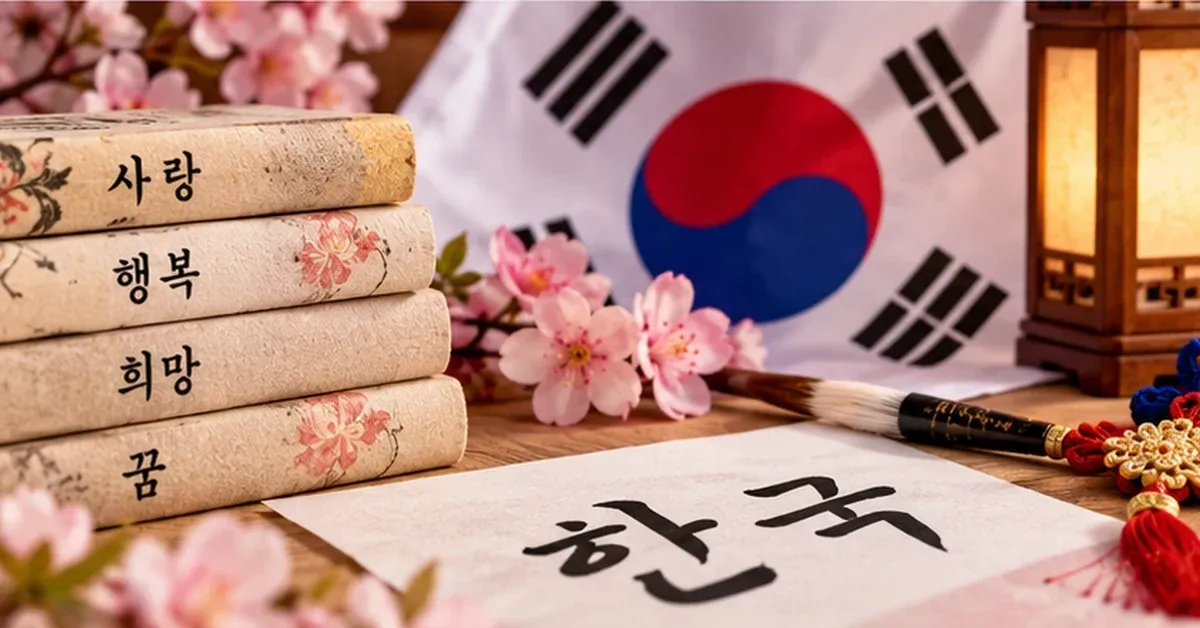
A short name can be especially useful if the child will grow up in a multilingual family. It should still be recognized as Korean rather than fabricated for ease of spelling. The pronunciation guide here is an approximation for English speakers, never a substitute for listening to a native speaker.
| Name | Hangul | Pronunciation cue | Notes |
|---|---|---|---|
| Yu-na | 유나 | YOO-nah | Well-known, flowing |
| Su-a | 수아 | SOO-ah | Short and gentle |
| Si-a | 시아 | SEE-ah | Modern short name |
| Bo-ra | 보라 | BOH-rah | Korean word: purple |
| Ha-neul | 하늘 | HAH-neul | Korean word: sky |
| Ji-u / Ji-woo | 지우 | JEE-oo | Widely usable |
| Min-a | 민아 | MEEN-ah | Smooth, familiar |
| Ha-rin | 하린 | HAH-rin | Contemporary |
| Ji-an | 지안 | JEE-ahn | Modern, balanced |
| A-rin | 아린 | AH-rin | Bright, airy |
| Tae-o | 태오 | TEH-oh | Short boy name |
| Do-ha | 도하 | DOH-hah | Modern boy name |
| Na-ri | 나리 | NAH-ree | Native word: lily |
| Bom | 봄 | BOHM | Native word: spring |
| Sa-rang | 사랑 | SAH-rang | Native word: love |
Names ending in -a, -u or -o can be comfortable for speakers of many languages, but English “oo,” “uh” and “ee” only approximate Korean vowels. A family name may create awkward consonant transitions, so practice the entire name aloud before deciding.
Unique and Rare-Sounding Korean Names
A name that sounds unusual in English is not necessarily rare in Korea. Instead of declaring these names statistically rare, this table identifies less familiar combinations and vocabulary-based choices worth exploring. Some are recognizable as established names, while others are best treated as creative possibilities for fiction until checked with a Korean-language speaker.
| Name | Hangul | Type | Naming note |
|---|---|---|---|
| Yun-seul | 윤슬 | Native word | Light glittering on water |
| Sae-bom | 새봄 | Native word | Fresh spring |
| Han-byeol | 한별 | Native combination | Great/one star association |
| Da-som | 다솜 | Older Korean word | Love association |
| A-ra | 아라 | Contemporary native-style | Often associated with sea; check usage |
| Ra-on | 라온 | Native-style | Joyful association |
| Han-gyeol | 한결 | Native word | Consistent |
| Ga-ram | 가람 | Native word | River |
| Cho-rong | 초롱 | Native word | Bright/clear association |
| Seul-a | 슬아 | Contemporary combination | Check Hanja if chosen |
| Do-yeon | 도연 | Hanja-based possible | Meaning depends on characters |
| Hae-in | 해인 | Established given name | Character-dependent meaning |
| Chae-rin | 채린 | Modern combination | Character-dependent meaning |
| Si-on | 시온 | Contemporary name | Also biblical place name in Korean usage |
| Da-yeon | 다연 | Modern combination | Character-dependent meaning |
| Eun-gyeol | 은결 | Creative combination | Check cultural fit |
| Jae-yul | 재율 | Modern style | Check character choices |
| A-sol | 아솔 | Creative/rare-sounding | Confirm cultural use |
| Nuri | 누리 | Native word | World |
| Byeol-ha | 별하 | Creative native-style | Star-based poetic suggestion |
- A rare-looking name can be challenging to write or pronounce; avoid novelty solely for the sake of novelty.
- If the name is for a real child, check the intended Hangul, Hanja eligibility, and pronunciation with local professionals when required.
- For a story, a distinctive given name is more believable when it is paired with a credible surname and social background.
Traditional Korean Names and Classic-Style Choices
Older Korean naming styles often favor combinations such as Young, Hye, Seong, Jung, Yeong, and Tae. These styles have not vanished, but they can sound more associated with earlier generations than the newest top-ten lists. A period drama character should reflect the actual historical period rather than borrowing a 2025 trend mechanically.
| Name | Hangul | Classic association |
|---|---|---|
| Young-hee | 영희 | Familiar older feminine example |
| Soon-hee | 순희 | Traditional feminine example |
| Mi-sook | 미숙 | Established older-generation sound |
| Kyung-hee | 경희 | Traditional, formal |
| Hye-sook | 혜숙 | Conventional classic |
| Young-ja | 영자 | Older-generation feminine |
| Jung-sook | 정숙 | Traditional and dignified |
| Byung-ho | 병호 | Established masculine |
| Chul-soo | 철수 | Familiar textbook-style masculine |
| Young-soo | 영수 | Traditional masculine |
| Sung-ho | 성호 | Classic masculine |
| Dong-sik | 동식 | Conventional older-style |
| Jae-ho | 재호 | Timeless masculine |
| Jung-ho | 정호 | Formal, sturdy |
| Seong-hun | 성훈 | Classic masculine |
| Hyeon-sik | 현식 | Established sound |
These are example name patterns, not a rule that older people must use them. Individual names cross generations, social classes and regions. Because North and South Korea developed different cultural contexts during the twentieth century, names common in one place or decade should not automatically be presented as universal.
Korean Name Meanings: How Hanja Changes the Answer
Many internet articles translate Seo-jun, Ji-ho or Min-jun with one neat phrase. That can be misleading. Traditional given-name syllables may be written using different permitted Hanja. One “Ji” can mean wisdom (智) or aspiration (志); one “Jun” might mean talented (俊) or steep (峻). The examples below demonstrate possible character readings, not the official meaning of everyone with that spoken name.
Common Name Syllables and Possible Hanja
| Sound (Hangul) | Example Hanja | One example meaning |
|---|---|---|
| Ji (지) | 智 | Wisdom |
| Ji (지) | 志 | Will; aspiration |
| Min (민) | 敏 | Quick; perceptive |
| Min (민) | 民 | People |
| Jun (준) | 俊 | Talented; outstanding |
| Jun (준) | 峻 | Steep; lofty |
| Hyeon (현) | 賢 | Wise; virtuous |
| Hyeon (현) | 玄 | Deep; mysterious |
| Seo (서) | 瑞 | Auspicious |
| Seo (서) | 書 | Book; writing |
| Ha (하) | 夏 | Summer |
| Ha (하) | 河 | River |
| Yu / U (우) | 祐 | To help; protect |
| U (우) | 宇 | Universe; space |
| Su (수) | 秀 | Excellent |
| Yeon (연) | 蓮 | Lotus |
| Yun (윤) | 潤 | Moisture; enrichment |
| Jin (진) | 珍 | Precious |
| Eun (은) | 恩 | Grace; kindness |
| Tae (태) | 泰 | Great; peaceful |
Illustrative Full-Name Meaning Examples
A whole name acquires a precise Hanja-based meaning only after a particular character combination is selected. These character combinations are examples, not assumptions about a real person’s name. Some Hanja choices may be uncommon or subject to registration rules.
| Given name | Illustrative Hanja | Character sense (example only) |
|---|---|---|
| Ji-hun (지훈) | 智勳 | Wisdom + merit |
| Min-jun (민준) | 敏俊 | Quick-minded + talented |
| Ji-min (지민) | 智敏 | Wisdom + alertness |
| Ha-jun (하준) | 夏俊 | Summer + talented |
| Hyeon-u (현우) | 賢祐 | Wise + helped/protected |
| Ji-yeon (지연) | 智妍 | Wisdom + beauty |
| Seo-yeon (서연) | 瑞姸 | Auspicious + beautiful |
| Da-eun (다은) | 多恩 | Many/abundant + grace |
| Eun-ha (은하) | 銀河 | Silver river: Korean word for galaxy |
| Tae-yang (태양) | 太陽 | Sun (standard Sino-Korean word) |
For everyday usage, you usually see Hangul, not the Hanja paperwork. This is why asking “What does Min-jun mean?” has no single reliable answer without the family’s actual chosen characters. A meaningful-name generator should store the written form and source of meaning separately rather than pretending every pronunciation maps to one gloss.
Common Korean Last Names and Family Names
Korean surnames generally come first. Kim, Lee and Park are widespread; the South Korean 2015 census identified them as the leading family names, followed by Choi and Jeong when individual Hanja surname groups were counted. Romanized spellings are personal conventions: the same Hangul family name may appear as Lee, Yi, Rhee, or I in Latin letters.
| Surname spellings | Hangul | Note |
|---|---|---|
| Kim / Gim | 김 | Very common |
| Lee / Yi / Rhee | 이 | Very common |
| Park / Bak | 박 | Very common |
| Choi / Choe | 최 | Common |
| Jung / Jeong | 정 | Common |
| Kang / Gang | 강 | Common |
| Cho / Jo | 조 | Common |
| Yoon / Yun | 윤 | Common |
| Jang / Chang | 장 | Common |
| Lim / Im | 임 | Common |
| Han | 한 | Common |
| Oh / O | 오 | Common |
| Seo / Suh | 서 | Common |
| Shin / Sin | 신 | Common |
| Kwon / Gwon | 권 | Common |
| Hwang | 황 | Common |
| Ahn / An | 안 | Common |
| Song | 송 | Common |
| Jeon / Jun | 전 | Common |
| Hong | 홍 | Common |
| Moon / Mun | 문 | Established |
| Bae / Pae | 배 | Established |
| Baek / Paek | 백 | Established |
| Namgung | 남궁 | Two-syllable surname |
| Hwangbo | 황보 | Two-syllable surname |
| Jegal | 제갈 | Two-syllable surname |
What Is Bon-gwan?
People who share a surname are not necessarily from one lineage. The Korean bon-gwan system identifies a family’s ancestral place or clan origin. Thus, two Kims can belong to different historical clans. If you are creating a Korean character, family identity should not be guessed from surname alone. For a real person, use the name form they choose, not the spelling a romanization chart says is most typical.

Korean Name Order, Romanization and Pronunciation
The conventional order is surname first and given name second: Kim Min-jun (김민준), not Min-jun Kim, although individuals sometimes adopt Western order for international use. Hangul itself normally writes the two-syllable given name without a space; the hyphen is a choice used when the name appears in the Latin alphabet.
Common Romanization Variants
| Hangul | Common English spellings | Why variants occur |
|---|---|---|
| 서준 | Seo-jun, Seojun | Hyphen versus no hyphen |
| 서윤 | Seo-yun, Seoyun, Seo-yoon | Lengthening/English vowel choice |
| 지우 | Ji-u, Ji-woo, Jiu | Romanization and English convention |
| 도현 | Do-hyeon, Do-hyun | Vowel transliteration preference |
| 은우 | Eun-u, Eun-woo | u / woo convention |
| 이 | Lee, Yi, Rhee, I | Long-established family spellings |
| 김 | Kim, Gim | Established spelling versus revised romanization |
| 박 | Park, Bak, Pak | Historical and practical conventions |
| 정 | Jung, Jeong, Chung | Different systems and personal spellings |
| 최 | Choi, Choe | Common legacy and revised forms |
The National Institute of Korean Language’s Revised Romanization system provides a useful reference, but personal name spelling often preserves traditional or individual choices. For instance, Seo-yun and Seoyun are not two different Hangul names by default; check the original Korean spelling before treating them as separate entries.
For Korean vowel and consonant romanization, see the National Institute of Korean Language: https://www.korean.go.kr/front_eng/roman/roman_01.do
Quick Pronunciation Tips
- Seo begins roughly with an “suh” sound; it is not the English word “see-oh.”
- Eo (어) is a Korean vowel that English spelling approximates imperfectly.
- Eu (으) is not simply English “oo”; it has a distinct Korean sound.
- When in doubt, keep Hangul alongside romanized spellings and listen to a Korean speaker pronounce the name.
- Do not assume one spelling is “wrong” because a celebrity uses a different English version.
Korean Full Name Combinations
The examples below illustrate natural surname-first structure, and they can be used as starting points for fictional characters. They are not claims about famous individuals, and they do not assign a guaranteed English translation. Before using an invented full name in a published work, check for unintended similarity to a real public figure.
| Full name | Hangul | Style / story fit |
|---|---|---|
| Kim Seo-yun | 김서윤 | Contemporary student or professional |
| Lee Ha-rin | 이하린 | Bright and current |
| Park Ji-an | 박지안 | Understated lead |
| Choi A-rin | 최아린 | Lyrical and young |
| Jung Chae-won | 정채원 | Elegant, familiar |
| Han Yu-na | 한유나 | Internationally accessible |
| Kim Do-yun | 김도윤 | Current boy name |
| Lee Seo-jun | 이서준 | Modern classic |
| Park Ha-jun | 박하준 | Gentle young lead |
| Kang Min-jun | 강민준 | Contemporary professional |
| Oh Ji-ho | 오지호 | Short and vivid |
| Song Hyeon-u | 송현우 | Friendly and steady |
| Bae Ga-on | 배가온 | Native-word style |
| Hong Ha-neul | 홍하늘 | Nature-inspired |
| Seo Yun-seul | 서윤슬 | Poetic, contemporary |
| Kim Seul-gi | 김슬기 | Thoughtful, warm |
For fantasy, animation, games or social media, a nickname or screen name can use a Korean word, but a real Korean legal-style name should still respect normal surname and Hangul conventions. A phrase that sounds poetic in English may sound awkward as a human name in Korean.
Pair a given-name choice with Korean last names when considering the whole name. Chinese names provide a useful comparison for character-based meanings, without making the two languages’ names interchangeable.
K-Drama and K-Pop Inspired Korean Names
Korean entertainment can introduce the sound of a name, but a celebrity’s Romanized spelling is not a dictionary translation. The people below illustrate authentic name patterns. These are existing public names given here as cultural references, not invented meanings or endorsements.
| Well-known name | Hangul | Why it is useful as an example |
|---|---|---|
| Kim Nam-joon | 김남준 | Surname-first, two-syllable given name |
| Park Ji-min | 박지민 | Ji-min is a familiar given-name pattern |
| Kim Tae-hyung | 김태형 | Illustrates Tae- name element |
| Lee Ji-eun | 이지은 | Shows Lee surname and Ji- combination |
| Son Ye-jin | 손예진 | Short, recognizable given name |
| Park Bo-young | 박보영 | Established Bo- and -young combination |
| Kim Se-jeong | 김세정 | Modern given-name formation |
| Jung Hae-in | 정해인 | Two-syllable given name; Hae-in |
| Kim Go-eun | 김고은 | Recognizable name with Korean-sounding rhythm |
| Bae Su-zy | 배수지 | Artist name spelling differs from Hangul Su-ji |
A K-drama character name may be chosen to evoke a generation, profession or personality, but the television script is not an etymology source. If you love a particular sound, search the Hangul and consider whether it suits the person being named rather than copying a celebrity’s entire full name.
How to Choose the Best Korean Name
A good shortlist combines attractive sound with a defensible writing choice. Start by deciding whether the name is for a real child, a fictional adult, a pet, or an online identity. The level of cultural verification needed is much higher for a legal name than for a character placeholder.
Practical Naming Checklist
- Write the exact Hangul before deciding on an English spelling.
- If using Hanja, select the actual characters; the pronunciation alone does not prove the meaning.
- Test the chosen given name after a realistic surname in Korean order.
- Say the full name slowly and quickly to check the rhythm.
- Avoid names that are too close to a particular real person if writing fiction.
- Check whether the chosen name is gender-leaning or genuinely flexible in modern usage.
- Compare several Romanized spellings, but respect the spelling a real person prefers.
- For official use, confirm current registration requirements and permitted characters with the relevant Korean authorities.
- Choose a meaning that makes sense to the family or character, not an overconfident internet gloss.
Korean Name Generator Ideas
A high-quality name generator should not simply join random syllables and invent an English meaning. A more useful tool lets visitors filter by gender usage, name era, native Korean word, Hangul spelling and ease of pronunciation. Each result should clearly show whether the meaning comes from an ordinary Korean word, a specified Hanja example, or a descriptive style tag.
| Generator filter | Example output | What the tool should show |
|---|---|---|
| Modern girls | Seo-a (서아) | Hangul + modern-style note; no fabricated translation |
| Modern boys | Ha-jun (하준) | Hangul + pronunciation |
| Native Korean word | Ha-neul (하늘) | Verified direct meaning: sky |
| Nature theme | Ga-ram (가람) | River; label cultural context |
| Gender-flexible | Ji-woo (지우) | Usage may vary; check trends |
| Full name | Kim Ji-an (김지안) | Surname and given name separated |
| Hanja demonstration | Ji-hun (智勳) | Meaning belongs to this written example only |
Korean Names A–Z (Romanized Index)
Korean is not organized by the Latin A–Z alphabet. The index below is an English-language browsing convenience, not a Korean alphabet chart or official ranking. Some Latin initials rarely begin common romanized Korean given names; avoid inventing suspicious entries simply to fill every letter.
| Letter | Example names | Hangul samples |
|---|---|---|
| A | A-rin, A-yun, A-reum | 아린, 아윤, 아름 |
| B | Bo-ra, Bom, Bit-na | 보라, 봄, 빛나 |
| C | Chae-won, Cho-rong | 채원, 초롱 |
| D | Do-yun, Do-hyeon, Da-eun | 도윤, 도현, 다은 |
| E | Eun-u, Eun-ha, Eun-seo | 은우, 은하, 은서 |
| G | Ga-ram, Ga-on, Gaeul | 가람, 가온, 가을 |
| H | Ha-jun, Ha-rin, Ha-neul | 하준, 하린, 하늘 |
| I | I-seo, I-jun, I-an | 이서, 이준, 이안 |
| J | Ji-an, Ji-woo, Jun-seo | 지안, 지우, 준서 |
| K | Kyung-hee (variant of Gyeong-hee) | 경희 |
| M | Min-jun, Min-seo, Min-a | 민준, 민서, 민아 |
| N | Na-ri, Na-eun, No-eul | 나리, 나은, 노을 |
| O | On-yu, O-ra (check context) | 온유, 오라 |
| P | Park is usually a surname | 박 |
| R | Ra-on; romanization varies | 라온 |
| S | Seo-yun, Su-bin, Seul-gi | 서윤, 수빈, 슬기 |
| T | Tae-o, Tae-hyun, Tae-yang | 태오, 태현, 태양 |
| U | U-jin; also Woo-jin in English | 우진 |
| Y | Yu-na, Ye-jun, Yun-seul | 유나, 예준, 윤슬 |
Frequently Asked Questions About Korean Names
What are some popular Korean girl names?
Seo-yun, Seo-a, A-rin, I-seo and Ji-an appeared among the leading names in one reported 2025 South Korean birth-name list. Trends can change, and Hangul helps distinguish names from romanized variants.
What are some popular Korean boy names?
Do-yun, I-jun, Si-u, Ha-jun and Tae-o led the reported 2025 boys’ list. Those are historical results for that year rather than a permanent ranking or automatic recommendation.
What Korean names mean love?
Sa-rang (사랑) is the ordinary Korean word for love and is used as a name. Da-som (다솜) also carries a traditional love association. Hanja-based names may suggest love through selected characters, not pronunciation alone.
Which Korean name means sky?
Ha-neul (하늘) is a clear example because 하늘 directly means sky. It offers a more straightforward meaning than a Hanja-based name with several possible character spellings.
What is a pretty Korean girl name?
Seo-yeon, Yu-na, Ha-rin, Chae-won and Su-a are attractive options with different rhythms. “Pretty” is a personal judgment; written characters and individual history determine any exact Hanja meaning.
What is a strong Korean boy name?
Tae-hyun, Jun-hyeok, Do-hyeon, Seung-min and Min-jun have confident-sounding forms. Strength is a descriptive impression here, not the verified meaning of every person with one of these names.
Are Korean names gender-neutral?
Yes. Ji-woo, Su-bin, Ji-an and native-word names such as Ha-neul can be flexible, though some names may be more common for a particular gender in a specific birth cohort.
Do Korean names put the last name first?
Traditionally, yes. Kim Seo-jun normally identifies Kim as the family name and Seo-jun as the given name. Some Koreans reverse the order or adapt spacing when publishing internationally.
Why do Korean names have hyphens?
Hyphens in Roman letters often separate the two syllables of a given name. Hangul does not require a hyphen, so Seo-yun, Seoyun and Seo Yun can represent one Hangul form depending on personal preference.
Does every Korean name have a fixed meaning?
No. Many traditional given names use Hanja, and multiple Hanja can have identical pronunciations. A precise translation therefore depends on the characters actually chosen. Native Korean word names can have a clearer vocabulary meaning.
Are Kim, Lee and Park the most common Korean surnames?
They are the three leading South Korean family names in the 2015 census. Other widespread names include Choi, Jung, Kang, Cho and Yoon. Counts depend on whether variants are grouped by Hangul or Hanja.
Can you use a Korean name without Hanja?
Yes. Many names are built from native Korean vocabulary, such as Ha-neul, Sa-rang, Bom, Ba-da and I-seul. Legal registration and writing requirements depend on the jurisdiction and circumstances.
What is a rare Korean girl name?
Yun-seul, Sae-bom or Cho-rong may feel distinctive to some readers. Their rarity should not be claimed without a matching-year name registry comparison; preference and regional usage vary.
What is the Korean name for moon?
The ordinary Korean word is dal (달). A person can choose a moon-inspired concept, but a given name containing a syllable that sounds like dal or wol does not automatically mean moon without verifying its exact form.
What is a Korean name meaning star?
Byeol (별) directly means star. Han-byeol (한별) is a related name pattern. If you want a star meaning, keeping the written Hangul visible is much safer than relying on English spelling alone.
Can Korean names be one syllable?
Yes, although two-syllable given names are common. There are also two-syllable family names, such as Namgung or Hwangbo, so not every Korean full name has exactly three syllables.
How do I pronounce Korean names correctly?
Use native-speaker audio where possible. Hangul makes the intended syllables clearer, while English spelling often approximates vowels. The Revised Romanization reference helps but does not replace listening practice.
Are K-pop stage names good baby name ideas?
They can introduce useful sounds, but stage names and public spellings may not match legal-name conventions. Research a full Korean spelling and avoid assuming that a singer’s name carries one universally agreed translation.
Can I use a Korean name for a fictional character?
Yes, but believable characterization includes an appropriate surname, naming era and social context. Review any created combination with Korean speakers if authenticity is important, especially for historical fiction.
How should I choose a meaningful Korean name?
Choose the Hangul first, decide whether you want native vocabulary or a Hanja-based form, verify the actual meaning, and test the sound with the surname. A short, accurate meaning is more useful than an elaborate invented one.
Conclusion
The most memorable Korean names balance sound, cultural fit and clarity. For a modern girl name, start with Seo-yun, Ji-an or Ha-rin; for a boy, Do-yun, Ha-jun or Seo-jun are current-sounding options. For a meaning that can be understood directly as a Korean word, consider Ha-neul (sky), Sa-rang (love), Ga-ram (river), Bom (spring) or Yun-seul (light shimmering on water). Keep the Hangul with every shortlisted name, and verify chosen Hanja instead of repeating generic online translations.
Whether you are naming a child or building a believable character, a thoughtfully researched name is more valuable than an endless list of unverified definitions. Use the tables to narrow your favorites, read the full names aloud and choose a form that genuinely matches the person or story.
Looking for more? Explore name origins and meanings across all eight categories.